
Home List your patent My account Help Support us
Aero Flux Q(quantum)-Phantom Controller
[Category : - MECHANICAL ENGINEERING- OTHER]
[Viewed 36 times]
Description of the Work
Over the past decade, the security environment in Southeast Asia has become increasingly complex and uncertain across geopolitical, technological, and emerging threat dimensions. In particular, rapid transitions in high-speed aircraft technologies, unmanned aerial systems, and advanced sensing and detection systems have had a direct impact on the defense capabilities of mid-sized states such as Thailand.
An assessment of overall capabilities indicates that Thailand still faces critical gaps in several key areas: airflow control technologies for high-speed aircraft; technologies for reducing detectability by modern radar and sensor systems; and electromagnetic field control technologies applicable to aircraft and defense systems. These gaps are not merely issues of armaments, but structural limitations that constrain the country’s long-term ability to develop and extend indigenous technological capabilities.
Principles and Applications
This technology is a control system for high-speed aircraft based on the regulation of airflow and quantum electromagnetic fields, utilizing devices founded on the principles of superconductivity to generate and control highly stable magnetic fields with minimal energy loss. The system operates in two primary modes:
Aero Mode: Controls the behavior of airflow around the aircraft through boundary layer control, directional manipulation of airflow, and the reduction of shock waves and wave drag by generating and adjusting quantum electromagnetic fields for active flow control. This results in reduced drag, enhanced stability, and improved flight performance at high speeds.
Quantum Mode: Utilizes electromagnetic fields derived from quantum effects to create distortions in physical and electromagnetic fields, thereby reducing detectability and enabling a form of physical stealth.
Both modes can operate independently or in combination, depending on the specified level of control, to enhance aircraft capabilities across different operational scenarios. The technology can be applied across a wide range of industries, including:
1. Military and Security Aircraft
Enhances flight performance, reduces detectability, and increases survivability of aircraft in security and national defense missions.
2. High-Speed and Next-Generation Aircraft
Applicable to hypersonic and experimental aircraft to address challenges related to drag, heat, and stability at extremely high speeds.
3. Unmanned Aerial Systems and Specialized Platforms
Enhances the capabilities of specialized aerial platforms that require high maneuverability.
4. Advanced Research and Technology Development
Serves as an experimental platform for the development of future quantum technologies, magnetic field systems, and advanced flight control systems.
Trends and Strategic Necessity
At the international level, technologically advanced countries are prioritizing the development of advanced aerodynamics, stealth and low-observability technologies, and electromagnetic field–based control systems. These trends indicate that such technologies are becoming “strategic infrastructure,” comparable to energy or communication systems in earlier eras. Countries lacking the ability to develop these technologies domestically will inevitably remain dependent on external sources.
The development and domestic ownership of intellectual property rights are therefore of critical importance, as they reduce the risks associated with dependence on foreign technologies, enhance strategic bargaining power at both state and organizational levels, enable the development of downstream and dual-use industries, and provide flexibility in determining application directions in line with national contexts. For technologies related to aviation and national defense systems in particular, early ownership of rights entails significantly lower costs than later procurement or technology transfer.
Industry Classification
Aerospace / High-Speed Aircraft / Advanced Flight Control Systems / Quantum Technology / Quantum Superconducting Technology / Military Technology / Advanced Defense Technology
Note: The memorandum of understanding has been reviewed, and the process for patent approval is currently underway.
TH Patent Application Number: 2501008593
Financial information
In the current global economic landscape, technological competitiveness has become a central determinant of national security, industrial resilience, and long-term economic sovereignty. Heightened geopolitical tensions, supply chain disruptions, and the increasing fragmentation of global technology ecosystems have underscored the risks associated with overreliance on foreign high-technology systems, particularly in aerospace, defense, and advanced engineering sectors.
For mid-sized economies such as Thailand, structural limitations in domestic high-technology development present both economic and strategic vulnerabilities. Advanced aerospace technologies—especially those related to high-speed flight, stealth, electromagnetic field control, and quantum-enabled systems—are characterized by extremely high barriers to entry, long development cycles, and strong intellectual property protection regimes. As a result, countries lacking indigenous capabilities are often constrained to costly procurement, restrictive licensing, or technology transfers with limited strategic autonomy.
At the same time, global investment trends indicate a growing allocation of capital toward dual-use technologies that serve both civilian and defense markets. Technologies that enhance aerodynamic efficiency, reduce energy losses, improve survivability, and enable advanced control systems are increasingly viewed as long-term strategic assets rather than short-term commercial products. Early-stage ownership of such technologies allows nations and organizations to capture higher value across the technology lifecycle, from research and development to industrial deployment and export potential.
Within this economic context, domestic development and ownership of advanced aerospace and quantum-enabled technologies provide multiple economic advantages: reduced exposure to external supply shocks, enhanced bargaining power in international cooperation, stimulation of high-value industrial clusters, and the creation of spillover effects into adjacent sectors such as energy systems, advanced materials, and precision manufacturing.
Consequently, investment in foundational technologies that support high-speed aircraft, electromagnetic field control, and quantum-superconducting applications is not merely a technical decision, but a strategic economic choice aimed at strengthening long-term national competitiveness, industrial independence, and sustainable growth in an increasingly technology-driven global economy.
Target Industry Groups
High-speed fighter aircraft industry
Reconnaissance aircraft industry
Specialized military aircraft systems industry
High-speed and next-generation aircraft industry
Hypersonic aircraft industry
Experimental aircraft and engineering testbed industry
Advanced flight control systems industry
Drag reduction and high-speed stability enhancement technology industry
Magnetic field and energy systems for aircraft industry
Aviation research industry
Quantum and superconducting technology research industry
Strategic technology development industry of the state
 Patent publications:
No publication
Asking price:
Make an offer
Make an offer
 Great invention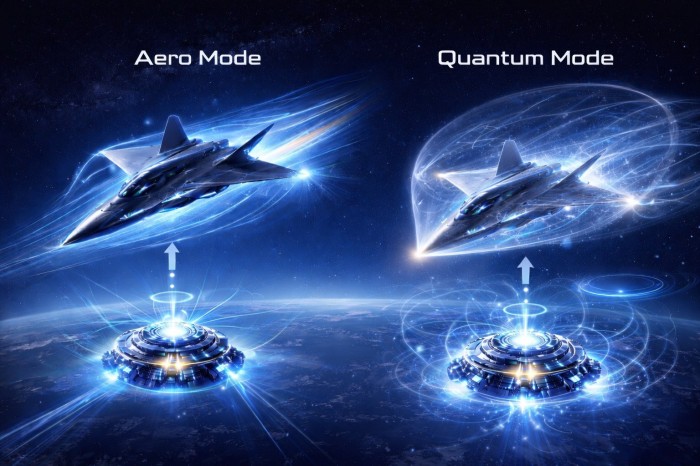
[ Home | List a patent | Manage your account | F.A.Q.|Terms of use | Contact us]
Copyright PatentAuction.com 2004-2017
Page created at 2026-01-08 13:10:54, Patent Auction Time.